Facebook Twitter Gplus LinkedIn YouTube Google Maps E-mail RSS
Showing posts with label India. Show all posts

30 September 2011

Hotel Bedroom Under the Sea


Walkways in aquariums are impressive, but they've got nothing on this underwater hotel bedroom in the Maldives. Can you imagine waking up with the Indian Ocean and its sea life floating around you?

The Maldives, a chain of atolls located about 250 miles south of India, are notable for being strikingly beautiful and also being the lowest country in the world. On average, the land is only about two feet above sea level — meaning that the country is in a particularly perilous position due to climate change and rising seas. While the hotel room is novel, beautiful, and luxurious, the threat the nation faces is very real. To hammer home the reality, the president has even held a meeting of his cabinet underwater.

25 September 2011

India reveals massive uranium discovery


A new mine in south India could contain the largest reserves of uranium in the world, a government official said in remarks reported Tuesday, signalling a major boost for the energy-hungry nation.
The Tumalapalli mine in Andhra Pradesh state could provide up to 150,000 tonnes of uranium, Srikumar Banerjee, secretary of the Department of Atomic Energy, told reporters after a four-year survey of the site was completed.
"It's confirmed that the mine has 49,000 tonnes of ore, and there are indications that the total quantity could be three times that amount," Banerjee was quoted as saying in The Times of India.
"If that be the case, it will become the largest uranium mine in the world," he said.
Previous estimates suggested that only about 15,000 tonnes of uranium would be produced at the mine, which is due to start operating by the end of the year. No details were released on the quality of the material in Tumalapalli, a key factor as other uranium mined in India has been inferior to imports being procured from France, Kazakhstan, Russia and elsewhere.
"The new findings would only augment the indigenous supply of uranium. There would still be a significant gap. We would still have to import," Banerjee was quoted as saying in The Hindu newspaper.
India gets less than three percent of its energy from atomic power and it hopes to raise the figure to 25 percent by 2050.

30 May 2011

'mutant' orange with no seeds

Experts have developed a new variety which contains as little as two or three seeds in each fruit, compared to the usual 15 to 30.

The new variety is known as the KinnowLS - the LS stands for low seeded.


Seedless: The KinnowLS (left) developed by scientists appears to have no pips whereas the a normal Kinnow (right) could contain as many as 30.

It is the eighth citrus variety developed in the past ten years by scientists at the University of California at Riverside. They describe the fruit as slightly larger than a mandarin, with a thin, extremely smooth rind. They say that each fruit contain 10 to 11 segments, which are fleshy and a deep orange in colour.

The orange has been developed developed by mutation breeding of the mandarin variety Kinnow, a mid-to-late season maturing variety.

Professor Mikeal Roose, head of the Department of Botany and Plant Sciences and part of the team which developed the new fruit, said: 'People who like very sweet fruit are going to find ‘KinnowLS’ to be very appealing.
The scientists say the fruit is slightly larger than a mandarin, contains 10 or 11 segments and has a thin, extremely smooth rind.

He said yet another attractive quality of ‘KinnowLS’ is that it can be grown in California’s desert regions because the fruit, which matures between February and April, does well in hot climates.  Its predecessor, Kinnow is the most important mandarin in the Punjab regions of India and Pakistan, where the fruit's trees constitute about 80 percent of all citrus trees.

Growers in India and Pakistan will have to wait a few years, however, before ‘KinnowLS’ trees develop roots there. Currently, there are plans to start distributing ‘KinnowLS’ in June to nurseries in California.

01 August 2010

Tata Motors to introduce Air Car Soon...


Tata Motors is taking giant strides and making history for itself. First the Landrover-Jaguar deal, then the world's cheapest car and now it is also set to introduce the car that runs on air, compressed air to be specific.

With fuel prices touching nearly $150 per barrel, it is about time we heard some breakthrough! India's largest automaker Tata Motors is set to start producing the world's
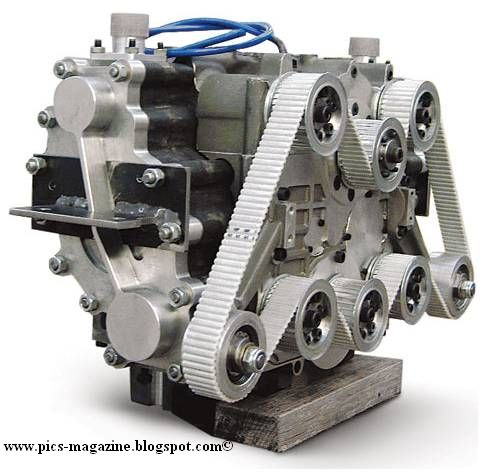
first commercial air-powered vehicle. The Air Car, developed by ex-Formula One engineer Guy Nègre for Luxembourg-based MDI, uses compressed air, as opposed to the gas-and-oxygen explosions of internal-combustion models, to push its engine's pistons. Some 6000 zero-emissions Air Cars are scheduled to hit Indian streets by August of 2009.

The Air Car, called the MiniCAT could cost around Rs. 3,50,000 ($ 8177) in India and would have a range of around 300 km between refuels. The cost of a refill would be about Rs. 85 ($ 2). Tata motors also plans to launch the world's cheapest car, Tata Nano priced famously at One lakh rupees(£1200) by October.

The MiniCAT which is a simple, light urban car, with a tubular chassis that is glued not welded and a body of fiberglass powered by compressed air. Microcontrollers are used in every device in the car, so one tiny radio transmitter sends instructions to the lights, indicators etc.

There are no keys - just an access card which can be read by the car from your pocket. According to the designers, it costs less than 50 rupees per 100Km (about a tenth that of a petrol car). Its mileage is about double that of the most advanced electric car (200 to 300 km or 10 hours of driving), a factor which makes a perfect choice in cities where the 80% of motorists drive at less than 60Km. The car has a top speed of 105 kmph. Refilling the car will, once the market develops, take place at adapted petrol stations to administer compressed air. In two or three minutes, and at a cost of approximately 100 rupees, the car will be ready to go another 200-300 kilometers.


 Related articles
Enhanced by Zemanta

Ads