Facebook Twitter Gplus LinkedIn YouTube Google Maps E-mail RSS
Showing posts with label Technology. Show all posts

12 January 2012

Some information about Space Station


The Phantom Torso, seen here on May 13th, 2001 in the Destiny laboratory on the International Space Station (ISS), is designed to measure the effects of radiation on organs inside the body by using a torso that is similar to those used to train radiologists on Earth. The torso is equivalent in height and weight to an average adult male. It contains radiation detectors that will measure, in real-time, how much radiation the brain, thyroid, stomach, colon, and heart and lung area receive on a daily basis. The data will be used to determine how the body reacts to and shields its internal organs from radiation, which will be important for longer duration space flights. (NASA) 


Backdropped against a blanket of heavy cloud cover, the Russian-built FGB, also called Zarya, approaches the Space Shuttle Endeavour and the U.S.-built Node 1, also called Unity (foreground) on December 6th, 1998. Inside Endeavour's cabin, the STS-88 crew readied the remote manipulator system (RMS) for Zarya capture as they awaited the rendezvous. (NASA) 


Blanketing clouds form the backdrop for this 70mm scene of the connected Zarya and Unity modules after having been released from Endeavour's cargo bay a bit earlier on December 4th, 1998. Six crew members, who had earlier spent the majority of their on-duty mission time working on the tandem of space hardware, watched the joined modules from Endeavour in a survey and fly-around mode. (NASA) 


Astronaut Robert L. Curbeam, STS-98 mission specialist, was photographed by a member of the Expedition One crew in the newly installed Destiny laboratory during the second of three space walks on February 12th, 2001. Ahead of schedule, the astronauts connected several computer and electrical cables between the docking port and the lab; unveiled the lab's large, high-quality window (through which this photo was taken) and attached an exterior shutter; and repositioned a movable foot platform they had taken inside Atlantis on the first spacewalk for a slight adjustment. (NASA) 


Cosmonaut Sergei K. Krikalev, Expedition One flight engineer, prepares to photograph some geographic targets of opportunity through a viewing port on the International Space Station's Zvezda Service Module in December of 2000. (NASA) 


10 April 2011

Three-dimensional Lighting Technology

27 November 2010

Most Expensive Accidents in History PART - II

Challenger Explosion
The Space Shuttle Challenger was destroyed 73 seconds after takeoff due on January 28, 1986 due to a faulty O-ring. It failed to seal one of the joints, allowing pressurized gas to reach the outside. This in turn caused the external tank to dump its payload of liquid hydrogen causing a massive explosion. The cost of replacing the Space Shuttle was $2 billion in 1986 ($4.5 billion in today's dollars). The cost of investigation, problem correction, and replacement of lost equipment cost $450 million from 1986-1987 ($1 Billion in today's dollars).

Prestige Oil Spill
On November 13, 2002, the Prestige oil tanker was carrying 77,000 tons of heavy fuel oil when one of its twelve tanks burst during a storm off Galicia, Spain. Fearing that the ship would sink, the captain called for help from Spanish rescue workers, expecting them to take the ship into harbour. However, pressure from local authorities forced the captain to steer the ship away from the coast. The captain tried to get help from the French and Portuguese authorities, but they too ordered the ship away from their shores. The storm eventually took its toll on the ship resulting in the tanker splitting in half and releasing 20 million gallons oil into the sea.
According to a report by the Pontevedra Economist Board, the total cleanup cost $12 billion.


Space Shuttle Columbia

The Space Shuttle Columbia was the first space worthy shuttle in NASA's orbital fleet. It was destroyed during re-entry over Texas on February 1, 2003 after a hole was punctured in one of the wings during launch 16 days earlier. The original cost of the shuttle was $2 Billion in 1978. That comes out to $6.3 Billion in today's dollars. $500 million was spent on the investigation, making it the costliest aircraft accident investigation in history. The search and recovery of debris cost $300 million.
In the end, the total cost of the accident (not including replacement of the shuttle) came out to $13 Billion according to the American Institute of Aeronautics and Astronautics. 


Chernobyl


On April 26, 1986, the world witnessed the costliest accident in history. The Chernobyl disaster has been called the biggest socio-economic catastrophe in peacetime history. 50% of the area of Ukraine is in some way contaminated. Over 200,000 people had to be evacuated and resettled while 1.7 million people were directly affected by the disaster. The death toll attributed to Chernobyl, including people who died from cancer years later, is estimated at 125,000. The total costs including cleanup, resettlement, and compensation to victims has been estimated to be roughly $200 Billion. The cost of a new steel shelter for the Chernobyl nuclear plant will cost $2 billion alone. The accident was officially attributed to power plant operators who violated plant procedures and were ignorant of the safety requirements needed. 


Enhanced by Zemanta

12 November 2010

Future Gadgets PART I

Nokia Aeon Full Screen Concept Phone

 The most prominent design feature of aeon is a touchscreen that stretches over the full surface area of the phone.

Microsoft Arc Mouse
When you go advanced in all your computer equipments, the next best thing is to get a futuristic mouse.


Calliper Style Radio

Like a precision calliper tool, 08 Radio by Mikael Silvanto lets you precisely find the station you want by
sliding the entire radio unit up and down the scale.

Capsule Radio Clock

Not rocket science, but definetely cool to get one.


Cellphone Code

This phone uses haptic technology to provide physical feedback for making a call. To turn it on twist a section, to dial a numbertwist a bunch of sections, to make an international callbreak your wrist!


Enhanced by Zemanta

01 August 2010

Tata Motors to introduce Air Car Soon...


Tata Motors is taking giant strides and making history for itself. First the Landrover-Jaguar deal, then the world's cheapest car and now it is also set to introduce the car that runs on air, compressed air to be specific.

With fuel prices touching nearly $150 per barrel, it is about time we heard some breakthrough! India's largest automaker Tata Motors is set to start producing the world's
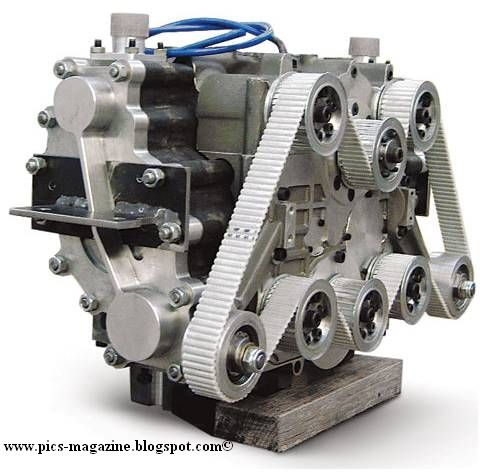
first commercial air-powered vehicle. The Air Car, developed by ex-Formula One engineer Guy Nègre for Luxembourg-based MDI, uses compressed air, as opposed to the gas-and-oxygen explosions of internal-combustion models, to push its engine's pistons. Some 6000 zero-emissions Air Cars are scheduled to hit Indian streets by August of 2009.

The Air Car, called the MiniCAT could cost around Rs. 3,50,000 ($ 8177) in India and would have a range of around 300 km between refuels. The cost of a refill would be about Rs. 85 ($ 2). Tata motors also plans to launch the world's cheapest car, Tata Nano priced famously at One lakh rupees(£1200) by October.

The MiniCAT which is a simple, light urban car, with a tubular chassis that is glued not welded and a body of fiberglass powered by compressed air. Microcontrollers are used in every device in the car, so one tiny radio transmitter sends instructions to the lights, indicators etc.

There are no keys - just an access card which can be read by the car from your pocket. According to the designers, it costs less than 50 rupees per 100Km (about a tenth that of a petrol car). Its mileage is about double that of the most advanced electric car (200 to 300 km or 10 hours of driving), a factor which makes a perfect choice in cities where the 80% of motorists drive at less than 60Km. The car has a top speed of 105 kmph. Refilling the car will, once the market develops, take place at adapted petrol stations to administer compressed air. In two or three minutes, and at a cost of approximately 100 rupees, the car will be ready to go another 200-300 kilometers.


 Related articles
Enhanced by Zemanta

Ads