Facebook Twitter Gplus LinkedIn YouTube Google Maps E-mail RSS
Showing posts with label Microsoft. Show all posts

06 March 2012

Apple is now more bigger than Microsoft and Google combined

Apple CEO Tim Cook: Apple's stock has soared to a market capitalisation of $460 billion this week, buoyed by results and rumours of new products. The company is now worth more than the entire U.S. Apple's stock has soared to a market capitalisation of $460 billion this week, buoyed by impressive results and rumours of new products around the corner. The tech giant's stock is worth more than the market capitalisations of rivals Google ($196.8bn)  and Microsoft ($256.1bn) combined.

Apple's profits recently passed $1 billion a week and the company now sells a million iPhones a day. Apple's market capitalisation only overtook Microsoft's in May 2010. 
Fortune magazine also pointed out the worthy statistics that Apple's stock is worth more than the gross domestic product of Sweden - $458 billion. Apple is worth more than all the gold in the American Federal Reserve - $350 billion, by Fortune's reckoning - and all the illegal drugs in the world, $321 billion. 

25 March 2011

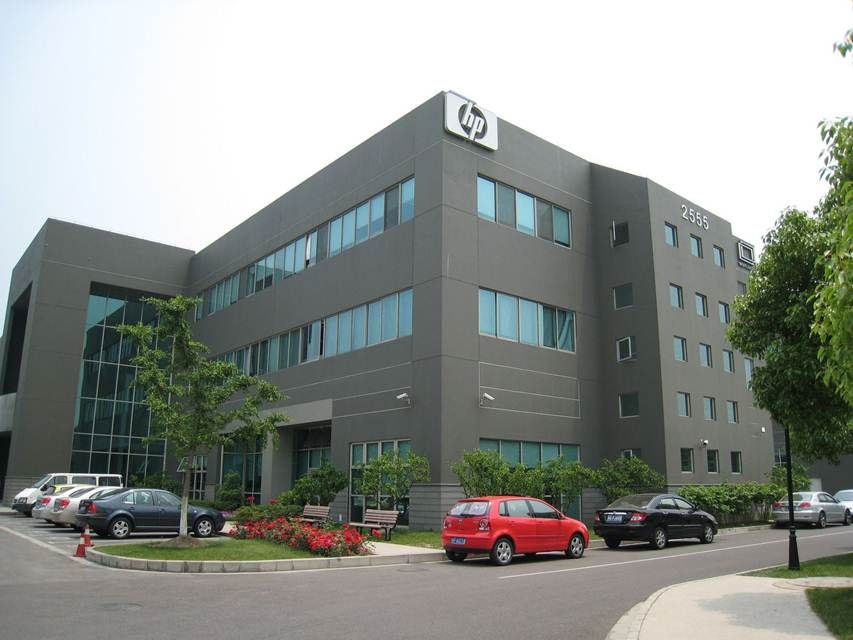
IT Buildings: HP & Microsoft

22 October 2010

Marko Casalan, 8, is officially world's youngest IT Whizz

Marko as deemed the Mozart of Computers by the Macedonian press after passing Microsoft's exams for IT professionals

While the other elementary school pupils skim through their comics in the break between classes, Marko Calasan takes out his copy of Implementing and Administering Security in a Microsoft Windows Server Network for a light read. At the age of 8, Marko has become the world’s youngest certified computer system administrator and was deemed the Mozart of Computers by the press after passing exams for IT professionals with the computer giant Microsoft.

In theory, he could now get a job maintaining complex office computer networks, even though he has not yet completed the third grade in his native town Skopje, in the former Yugoslav Republic of Macedonia. “The Microsoft officials gave me computer games and DVDs with cartoons when I passed the exams because I am a child. That was nice, but I’m not really interested in those things,” young Marko told The Times.

 “I’d like to be a computer scientist when I grow up and create a new operational system.”

His parents, who are IT experts and run a computer school for children, are considering sending Marko abroad to a specialised institute of learning for gifted children, as none exists in Macedonia.  “Marko displayed exceptional learning abilities at a very early age. He was able to replicate a computer operation after only reading about it on the internet. Now we ask him for help when we have some IT related problem at work,” Marko’s mother, Radica Calasan, 38, told The Times. She and her husband Milan, 37, are planning to publish a book on computer education for small children based on Marko’s development, which, they believe, could at least in part be replicated by other children of his age.

“He is obviously extraordinary gifted, but children above the age of 6 could learn much more about computers than generally assumed,” Mrs Calasan said. At school, Marko’s favourite subject is maths, and in his spare time he browses internet forums for IT professionals and participates in debates about complex computer engineering problems. Apart from his unlikely hobby of training Thai boxing, he has got a keen interest in physics and astronomy and was unable to sleep because of excitement on the night before the much-feared experiment aimed to recreate Big Bang conditions at the underground facility of the European Organisation for Nuclear Research or CERN in Switzerland.

The experiment failed because of technical problems, but Marko is confident that it will eventually prove to be a scientific breakthrough. “The media said it could cause the end of the world,” he said, “but there was never any danger of that.” 

Related articles
Enhanced by Zemanta

13 October 2010

The Top Ten Harmful Viruses & Anti Viruses

In simple terms, a virus can aptly be called a virtual disease which affects a computer system and makes it sick, forcing to act in a manner undesired by the user. No good deed goes unpunished, and with the joys and leisure that were brought by the computer, along came the viruses to ruin all the fun. There are billions of viruses out there, big and small. But there were some that stood out and ruined things for us in a spectacular fashion. Below is a list of 10 of the deadliest virus which create havoc in the virtual as well as the real world. 
 
I love you
The three words that can at most motivate you to cross the seven seas - or at least tempt you to open en email. This very temptation was the downfall of many computer users when this multipurpose- multi skilled virus hit the web. It had the ability to replicate itself via IRC chat and email, transfer and hide itself in different files and folders, and infect the registry keys once you opened an email in you inbox declaring “I Love You”. The virus thought to be originated somewhere in the Philippines, caused damage which was estimated to be around $8-10 billion.
Melissa
The creator of this virus received a 20 month jail sentence and a $5000 fine. Generated over a decade ago, this clever piece of virtual disease operated through Microsoft Outlook. This is how it worked: you receive an email titled “Here is the Document you asked for” from an unknown sender, you got infected as soon as you opened the email, and the virus would replicate and delivers itself to the top 50 people on your list without you getting a hint of it. Some major US government departments were hit and the damage is thought to be around $1 billion at least. A 20 month jail sentence well deserved.
  
MyDoom
MyDoom was instigated somewhere in mid 2004 and it actually prompted US senator to propose the creation of a “National Virus Response Centre”. The virus attacked in two phases; the first phase infected different Operating Systems, creating inroads and backdoors and making them vulnerable to external users. Once this problem was sorted out, the MyDoom struck again after few months, this time targeting the Search Engines like Google, slowing them down considerably, and crashing a few.
Nimda 
Spell it backwards and you will understand its prime targets: yes, the ‘Admin’ and servers. It was basically a worm and has the record of being the fastest ever virus to spread; it took only 22 minutes to break into the list of top ten most deadly viruses of all times. It basically targeted internet servers and websites, creating a mass crater through which thousands of computers were affected at the same time. Once infected, the systems became exposed to open attacks by the outsiders.
 
Code Red 
Damages of almost $200 million a day, and affecting the computers inside the White House are the degree of achievements of this virus. It subjugated the Windows by acting as a buffer overflow, sending humongous amount of information to the computer so that it spilt over, eventually forcing a shut down by overlapping the memory of the computers. The problem wasn’t solved until Microsoft issued a revival package to cater for this virus.
SQL Slammer/Saphire
Another swiftly spreading virus, it hit 75,000 computers in the first 10 minutes of its inception, taking down and severely damaging numerous American Banks, Security systems and organizations, and Airline networks. And the virus wasn’t just privy to the US; it ruthlessly damaged the internet capacity of South Korea for at least half a day. The damage was estimated around at least a billion dollars.
Storm Worm 
One of the latest and most recent viruses to strike the internet, the Storm Worm employed a similar strategy to the one used by the Melissa; the mail’s title mentioned a current natural disaster like an earthquake (but most often a storm). Once the email was opened, the virus spread around like wild fire, affecting registries and documents across the hard disk. It turned out to be a mother-virus, instigating numerous hidden programs in the background which made the PC vulnerable and enticing to hackers.
Klez 
With the mix characteristics of a virus, worm and a Trojan horse, Klez gave the antivirus programs a real headache by simply disabling them and making them look like a joke. However this is only the beginning of its trickery; after it was thought it be defeated, it was taken over, decoded and customized by black hat hackers (hackers who specialize in unauthorized penetration) . Its ability was enhanced by providing it with the capability to "spoof" from the user's address book and make it look like that an email came from them, increasing the chances of the receiver opening the email and becoming the next casualty.
Sasser
Damaging the computer through network ports, Sasser mostly targeted Windows 2000 and XP. It’s main casualties were the news agency Agence France-Presse (AFP) which had all its satellite communications jammed for hours , U.S. Airlines which had to reschedule its flights because of the worm had depleted their computers, a Finnish insurance company which was forced to close down 130 of its offices on emergency basis, Goldman Sachs, and Deutsche Post were all badly affected as well. However its unique feature was that it did not spread through emails, but rather observed computers and kept a look out for their vulnerabilities. On the basis of its knowledge, it would scan random IP addresses from the database and send itself to the next victim.
  
Autorun  
This virus primarily targeted USBs and flash drives and established them as its major source of movement and propagation. It affected networks and all the computers present on them. Once affected, the folder options would be disabled, the task manager too would be unavailable and the virus itself would become the system administrator. The virus would replicate itself in all the folders, therefore eating up useful space on the hard disk and making it eventually extremely slow. The loss was in terms of useful data on millions of computers across the world. 
Related articles 

24 August 2010

Rare Photos Collection PART - II

Ken Thompson (L)and Dennis Ritchie(R) ,creators of UNIX.
Dennis Ritchie improved on the B programming language and called it 'New B'.
B was created by Ken Thompson as a revision of the Bon programming language (named after his wife Bonnie)
He later called it C. 

Larry Page(L) and Sergey Brin(R), founders of Google.
Google was originally named 'Googol'.
After founders (Stanford graduates) Sergey Brin and Larry Page presented their project to an angel investor...
they received a cheque made out to 'Google' !...
So they kept name as GOOGLE 


Andreas Bechtolsheim , Bill Joy, Scott Mc Nealy and Vinod Khosla of SUN(StanfordUnivers ity Network) MicroSystems.
Founded by four StanfordUniversity buddies.
Andreas Bechtolsheim built a microcomputer;
Vinod Khosla recruited him;
Scott McNealy to manufacture computers based on it;
and Bill Joy to develop a UNIX-based OS for the computer...
SUN is the acronym for Stanford University Network .


AND THIS PICTURE WAS TAKEN WHEN SUPERHIT SHOLEY WAS STARTED..... .
They were looking at ashrani when he was doing practice first time with his funny Jailer's dress... ALONE on one rock..


Related articles
Enhanced by Zemanta

18 August 2010

Rare Photos Collection PART - I

Tim Berners Lee -- Founder of the World Wide Web
 Picture taken when microsoft was started (the one who is highlighted is Bill Gates

 Steve Woznaik(sitting) and Steve Jobs of APPLE Computers.
He was three months late in filing a name for the business because he didn't get any better name for his new company.
So one day he told to the staff: "If I'll not get better name by 5 o'clcok today, our company's name will be anything he likes..." so at 5 o'clcok nobody comeup with better name, and he was eating APPLE that time...
so he keep the name of the company 'Apple Computers


Bill Hewlett(L) and Dave Packard(R) of HP.
Behind them in the picture is the famous HP Garage.
Bill Hewlett and Dave Packard tossed a coin to decide whether the company they founded would be called Hewlett-Packard or Packard-Hewlett.
And the winner was NOT Bill... the winner was Dave. 

Related articles
Enhanced by Zemanta

Ads