Facebook Twitter Gplus LinkedIn YouTube Google Maps E-mail RSS

11 May 2012


Dear Followers and Viewers,

Here I inform you all that due to some technical reasons I have changed the posts to techno crunch.


New Site consists of more useful and informative posts from all of my blogs, some new ones and mainly associated to Healthcare.


You all requested to visit the new site and keep watching and reading useful articles from all sections.


Click on the image below to redirect to the site, or CLICK HERE....


Sorry for INCONVENIENCE... 

04 April 2012

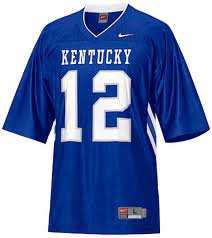
Coolest Football Jerseys

Football in only a handful of years has been declared America's most popular sport. Super Bowl every season is now the most viewed sporting event, an opportunity that is the nature of a holy day, the campaign is full of intensity. Professional American football, a dedicated TV channel, and the American Football 365 days a year at the Sports Entertainment Network report shows. The NFL jerseys every month, every season, NFL team stores and other retailers offer. NFL Jersey Wholesaler will learn and understand the big names is a significant commercial potential.

Other holder of an attractive long-run organizations, legends and up and coming young stars or hoped to win the game to new cities are related to trades. Often consumers for the last great score and classic uniforms, color schemes and designs and even some teams that are no longer around, the opportunity to wear promise. Which deal in wholesale jersey throwbacks to a store. The old Houston Oilers or Ron Warren Moon throwback jersey from the Eagles jerseys are a couple of examples. The drafting team is different every year, and the most talented college recruits can sign with any number of sides. These shirts are following the first draft of a few months.

23 March 2012

Apple's Newest Watch : iPod Nano


What time is it? Who cares! Apple's newest timepiece puts music, video, photos and step-counting front-and-center, and lets the minutes fall where they may.


Sure, you can check the time, but that's hardly the point with this attractive piece of wrist jewelry. Its unisex design goes equally well with a man's suit, a lady's sweater or a jogging outfit.
One downside: It doesn't come with a watchband, so you'll need to get your own. Fortunately, the clip on the back lets you easily attach it to the strap of your choice. 
Unlike almost every other watch we've tested, Apple's Nano has a touch-sensitive, high-resolution LCD display. The interface is a little counterintuitive at first, but it's no more difficult than anything from Tokyo Flash. As a bonus, you can rotate its face with a twisty two-finger gesture, making it work for you in any orientation.

18 March 2012

The Era of Robotic Warfare : 30% of All US Military Aircraft are Drones

 Some herald it as the cure for terrorism, others deride it as mindless video game warfare, but few doubt that the American era of drone warfare has arrived. From short range surveillance craft like the Raven to missile packing hunter-killers like the infamous Predator, the US military is awash with unmanned aerial vehicles (UAV). According to a recent report from the Congressional Research Service, nearly one in three US warplanes are drones…and those machines are changing the way the world wages war. US soldiers in Afghanistan rely more and more upon intelligence gathered from drones, and President Obama recently lauded the precision and success of deadly drone-strikes against top terrorist targets in Pakistan. Meanwhile all advanced militaries in the world, from Israel to Russia, seem to be improving their own drone capabilities.

14 March 2012

The World's Tallest Building Is Now A 'Distressed' Property


At 2,717 feet, the Burj Khalifa is the tallest building in the world, but since its opening two years ago, it has struggled to profit from its grand reputation.

As Angela Shah reports for The New York Times, investors are calling the Burj "distressed," as the building has not yet bounced back from a 40 percent downturn in apartment prices it suffered in 2010.
Meanwhile Dubai's stock market is stuck at its lowest level in 7 years.
The slump in the Burj's value is indicative of just how much Dubai has suffered from its absurd real estate bubble. Real estate values have fallen by over 60 percent since the Dubai crisis, according to Arabian Business
Some of the ambitious real estate projects that have already failed in Dubai include The Nakheel Harbour and Tower, the Palm Deira, and the Trump International Hotel and Tower
Forty percent of buildings in Dubai are vacant, despite that the Emirate has not stopped building and real estate values have dipped lower.

10 March 2012

World's hottest Chilli Vodka made from fiery naga pepper goes on sale at Selfridges

The hottest chilli vodka in the world is to go on sale at Selfridges.

The Naga Chilli Vodka rates 1000,000 on the Scoville scale - the international method of measuring the heat in a chilli - making it the most potent chilli vodka ever to be sold. The chilli used in the vodka is the Naga Jolokia, which is known to be one of the hottest chillies it is possible to grow: hotter than most law-enforcement grade pepper sprays.

The drink is made by fermenting litres of vodka with 18kg of the fiery peppers. The resulting concoction is left for several weeks to infuse. Once the vodka has turned a dark caramel colour, the infusion is complete and the vodka can be bottled. The resulting spirit measures 100,000 on the Scoville scale - twice as hot as Tabasco, and almost on a par with the level of heat from a Habanero or Scotch bonnet chilli. Expert mixologists recommend the new vodka be used in a classic Bloody Mary for a drink with extra kick. 

06 March 2012

Apple is now more bigger than Microsoft and Google combined

Apple CEO Tim Cook: Apple's stock has soared to a market capitalisation of $460 billion this week, buoyed by results and rumours of new products. The company is now worth more than the entire U.S. Apple's stock has soared to a market capitalisation of $460 billion this week, buoyed by impressive results and rumours of new products around the corner. The tech giant's stock is worth more than the market capitalisations of rivals Google ($196.8bn)  and Microsoft ($256.1bn) combined.

Apple's profits recently passed $1 billion a week and the company now sells a million iPhones a day. Apple's market capitalisation only overtook Microsoft's in May 2010. 
Fortune magazine also pointed out the worthy statistics that Apple's stock is worth more than the gross domestic product of Sweden - $458 billion. Apple is worth more than all the gold in the American Federal Reserve - $350 billion, by Fortune's reckoning - and all the illegal drugs in the world, $321 billion. 

25 January 2012

Looking more on Space Station


Backdropped by a blanket of clouds, the ISS was photographed by a crewmember on board the Space Shuttle Atlantis following the undocking of the two spacecraft. Atlantis pulled away from the complex at 8:13 a.m. (CDT) on October 16, 2002. (NASA


The Soyuz 14 (TMA-10) spacecraft approaches the International Space Station. With cosmonaut Oleg Kotov at the controls, the Soyuz linked up to the Zarya module nadir port at 2:10 p.m. (CDT) on April 9, 2007. The docking followed Saturday's launch from Baikonur Cosmodrome in Kazakhstan. (NASA) 


The ISS, seen following undocking at 1:13 p.m. (CST), December 9, 2000. This is one of the first images of the entire station with its new solar array panels deployed. Before separation, the shuttle and space station had been docked to one another for 7 days. Endeavour moved downward from the space station, then began a tail-first circle at a distance of about 500 feet. The maneuver, with pilot Michael J. Bloomfield at the controls, took about an hour. (NASA) 


Astronaut John L. Phillips, Expedition 11 NASA ISS science officer and flight engineer, is photographed among stowage bags in an airlock on the ISS on May 18th, 2005. (NASA) 


This medium close-up view in the now densely-equipped Destiny laboratory of the International Space Station shows one floating ball-shaped item which is actually one of the Synchronized Position Hold, Engage, Reorient, Experimental Satellites (SPHERES) on January 27th, 2008. Cosmonaut Yuri I. Malenchenko, Expedition 16 flight engineer representing Russia's Federal Space Agency, is also visible in the background. (NASA) 


The Canadarm2 (center) and solar array panel wings on the International Space Station are featured in this image photographed by a crewmember during the mission's first planned session of extravehicular activity (EVA) while Space Shuttle Endeavour (STS-118) was docked with the station on August 11th, 2007. To see a larger panorama (stitched together with another photo of the Endeavour), click (NASA) 


Astronaut C. Michael Foale, Expedition 8 commander and NASA ISS science officer, equipped with a bungee harness, exercises on the Treadmill Vibration Isolation System (TVIS) in the Zvezda Service Module on the ISS on April 12th, 2004. (NASA)


20 January 2012

Watch Electric Super Bus in Dubai


First Super Bus Received in Dubai for Travelling from Dubai to Abu Dhabi

Electric Super Bus Tours Abu Dhabi & Dubai
Speed 250 Km/hr


Image Source : NidoKidos.com

16 January 2012

More Space Station News


Silhouetted over Earth, the International Space Station (ISS) is seen on October 11th, 2000 in a configuration soon to be changed, once the approaching STS-92 crew adds its important new changes. If oriented with Earth's horizon on the left, the ISS elements, from the left, are Node 1 or Unity, the functional cargo block or Zarya, the service module or Zvezda and the Progress supply ship. In a matter of days, the crew went on to add the Z1 Truss structure and a third pressurized mating adapter. (NASA


Astronaut Donald R. Pettit, Expedition 6 NASA ISS science officer, photographs his helmet visor during a session of extravehicular activity (EVA) on January 15th, 2003. Pettit's arms and camera are visible in the reflection of his helmet visor. Astronaut Kenneth D. Bowersox, mission commander, is also visible in visor reflection, upper right. (NASA) 


The Expedition Three (white shirts), STS-105 (striped shirts), and Expedition Two (red shirts) crews assemble for a group photo in the Destiny laboratory on the International Space Station on August 17th, 2001. (NASA) 


An overhead view of the exterior of the Space Shuttle Atlantis' crew cabin, part of its payload bay doors and docking system was provided by Expedition 16 crewmembers. Before docking with the International Space Station, astronaut Steve Frick, STS-122 commander, flew the shuttle through a roll pitch maneuver or basically a backflip to allow the space station crew a good view of Atlantis' heat shield. Using digital still cameras equipped with both 400 and 800 millimeter lenses, the ISS crewmembers took a number of photos of the shuttle's thermal protection system and sent them down to teams on the ground for analysis. Photo taken February 9th, 2008. (NASA) 


Astronaut Carl E. Walz, Expedition Four flight engineer, catalogs canisters of water in the Zvezda Service Module on the International Space Station on March 11th, 2002. (NASA) 


12 January 2012

Some information about Space Station


The Phantom Torso, seen here on May 13th, 2001 in the Destiny laboratory on the International Space Station (ISS), is designed to measure the effects of radiation on organs inside the body by using a torso that is similar to those used to train radiologists on Earth. The torso is equivalent in height and weight to an average adult male. It contains radiation detectors that will measure, in real-time, how much radiation the brain, thyroid, stomach, colon, and heart and lung area receive on a daily basis. The data will be used to determine how the body reacts to and shields its internal organs from radiation, which will be important for longer duration space flights. (NASA


Backdropped against a blanket of heavy cloud cover, the Russian-built FGB, also called Zarya, approaches the Space Shuttle Endeavour and the U.S.-built Node 1, also called Unity (foreground) on December 6th, 1998. Inside Endeavour's cabin, the STS-88 crew readied the remote manipulator system (RMS) for Zarya capture as they awaited the rendezvous. (NASA) 


Blanketing clouds form the backdrop for this 70mm scene of the connected Zarya and Unity modules after having been released from Endeavour's cargo bay a bit earlier on December 4th, 1998. Six crew members, who had earlier spent the majority of their on-duty mission time working on the tandem of space hardware, watched the joined modules from Endeavour in a survey and fly-around mode. (NASA) 


Astronaut Robert L. Curbeam, STS-98 mission specialist, was photographed by a member of the Expedition One crew in the newly installed Destiny laboratory during the second of three space walks on February 12th, 2001. Ahead of schedule, the astronauts connected several computer and electrical cables between the docking port and the lab; unveiled the lab's large, high-quality window (through which this photo was taken) and attached an exterior shutter; and repositioned a movable foot platform they had taken inside Atlantis on the first spacewalk for a slight adjustment. (NASA) 


Cosmonaut Sergei K. Krikalev, Expedition One flight engineer, prepares to photograph some geographic targets of opportunity through a viewing port on the International Space Station's Zvezda Service Module in December of 2000. (NASA) 


08 January 2012

New China Train


The countries of the world owe China more money than they can ever pay back.

China is buying and or building something all around the world.

They are building all kinds of things all over China .

And they are debt free, and they don't have anyone shooting at them and no wars to fight.

Or a ship load of people trying to get into their country.

Tell me what are they doing right, and the rest of us doing wrong???

And they still have the money to build this train line???

New Chinese Train...unbelievable!


30 November 2011

America's Incredible Weapons PART III


Manufactured by: Remington
Release date: 2010-2011
The product of a long string of modifications to the 22 year-old M24 sniper rifle, the XM2010 is designed specifically to be effective in the high altitude long distance fighting in Afghanistan.
To provide quiet, pinpoint accuracy at up to 1200 meters the XM2010 carries more gun powder in the bullets it fires, has a flash suppressor, sound suppressor, and a thermal sleeve to hide the warm barrel from FLIR.
When U.S. Snipers graduate from the five-week school at Fort Benning, Ga. they are capable of hitting a man-sized target nine out of ten times at 600 meters — over a third of a mile away.


The Taser Shockwave


Manufactured by: TASER
Release date: 2008
The Taser model will electrocute a crowd of people at the touch of a button.
Creating an "area of denial" the Taser can be stacked up and strung together almost indefinitely. It will also mount to any vehicle.
The Shockwave has an effective distance of 25 feet and can be seen in action on this company video at Gizmodo.


Manufactured by: Heckler & Koch
Release date: 2014
Dubbed "The Punisher" by American forces in Afghanistan, the XM25 accurately shoots a next-generation, 25mm, grenade up to 500 meters.
But, the distance isn't what impressed soldiers involved in the live trial of the weapon — it was the grenade programming.
A targets distance is transmitted by a rangefinder in the XM25 to the grenade in the firing chamber. When the grenade leaves the barrel it is spiraling, like a football, and measures the distance it's traveled by the number of spirals it completes.
The detonation can be manually programmed within 10 meters to hit enemy in bunkers or behind barriers.
A platoon leader commented in an Army Times article: "Engagements that typically take 15 to 20 minutes were over in a matter of minutes.”

22 November 2011

America's Incredible Weapons PART II


The Laser Avenger

Manufactured by: Boeing (BA)
Release date: 2009
Only a few centimeters in diameter and invisible to the naked eye, the Avenger's laser is 20 times hotter than an electric stove top and will cut through artillery shells with ease.
The Avenger was designed with the hope of effectively detonating the Improvised Explosive Devices (IEDs) that inflict more damage on American forces than any other weapon.
Current disposal methods involve a version of the MAARS robot that insurgents will bomb to take out of action.
The Avenger is also being tested to take down aerial vehicles.


Manufactured by: Raytheon (RTN)
Release date: 2008
Dubbed America's Ray Gun, by 60 Minutes, the Active Denial System is really more a combination radar array and microwave.
The ADS shoots a stream of electromagnetic waves, shorter than microwaves, which are instantly absorbed by the top layer of skin.
The pain is so intense, the reaction to run from the beams so overpowering, the military calls it the "Goodbye Weapon."
The ADS has been used domestically, both on test subjects and prison inmates. It was deployed to Afghanistan in 2010, only to be recalled, inexplicably, months later.
The military claims there are no lingering effects from exposure.


The Black Knight

Manufactured by: BAE Systems (BA.L)
Release date: 2008
The Black Knight is a combination remote controlled tank and forward scouting vehicle, designed for situations too risky for manned vehicles.
To keep costs low, the Black Knight shares a weapons systems and engine parts with the manned Bradley Fighting vehicle. Including a 30mm cannon, machine gun and 300 horsepower engine.
The vehicle is also fitted with autonomous navigation software and can design and follow its own routes without input from an outside source.

14 November 2011

America's Incredible Weapons


PHASR Rifle

Manufactured by: the Department of Defense (DOD)
Release date: 2007
The Personnel Halting and Stimulation Response (PHASR) rifle is a handheld laser array, called a dazzler, capable of blinding and disorienting anyone caught in its sights.
While weapons to cause blindness were sagely restricted by the 1995 United Nations Protocol on Blinding Laser Weapons (a ruling the U.S. didn't agree to until 2009) the PHASR causes only temporary blindness, thus escaping the ban.
Dazzlers were originally mounted devices to U.S. soldiers rifles as a non-lethal way to halt Iraqis who failed to stop at checkpoints.
The PHASR uses a green laser array to calculate its targets distance and ensure its non-blinding intensity.


Manufactured by: Maxwell Atchisson
Release date: 2005
The AA12 can fire five 12-gauge shells per second and because the recoil is engineered at just 10 percent a normal shotgun, it can be fired from the hip with only one hand.
The Atchisson also fires a high explosive or fragmentation grenade called a FRAG-12 round to 175 meters with equal efficiency.
Designed for long-term combat use, tests have shown the AA12 can fire up to 9,000 rounds without being cleaned or jamming.
All the user needs to do is hold the trigger down for four seconds to empty the 20 round drum at a target.


Manufactured by: QinetiQ - QQ
Release date: 2009
The MAARS Robot is a modified remote control, bomb disposal robot.
Customizable to various needs, the MAARS can be configured with either an MB240 machine gun and 40mm grenade launcher, or a loudspeaker and eye dazzling laser, or bean bag guns, smoke, and pepper spray.
To date, no shots have been fired in combat by a remote device like the MAARS.


MQ9 Reaper Drone

Manufactured by: General Atomics Aeronautical Systems (GA-ASI)
Release date: 2001
The Reaper has been around for over 10 years, but was used largely for intelligence and reconnaissance until recently. 
Today, squadrons of F-16's are being transitioned into fully unmanned drone fleets.
The Reaper is the largest of the UAV's in the U.S. arsenal with a wingspan of 84 feet, a takeoff weight of 7,000 pounds, a payload capacity of 3,000 pounds and a flight time of 36 hours.
The drone climbs up to 52,000 feet, and reads a license plate from over two miles away. Capable of carrying 500 pound bombs, air-to-ground, and air-to-air missiles the UAV fleet is poised to perform the lion's share of American air support.
As of March 2011 the Air Force has more personnel training to operate its burgeoning drone fleet than for any other weapon system in its arsenal.


Ads